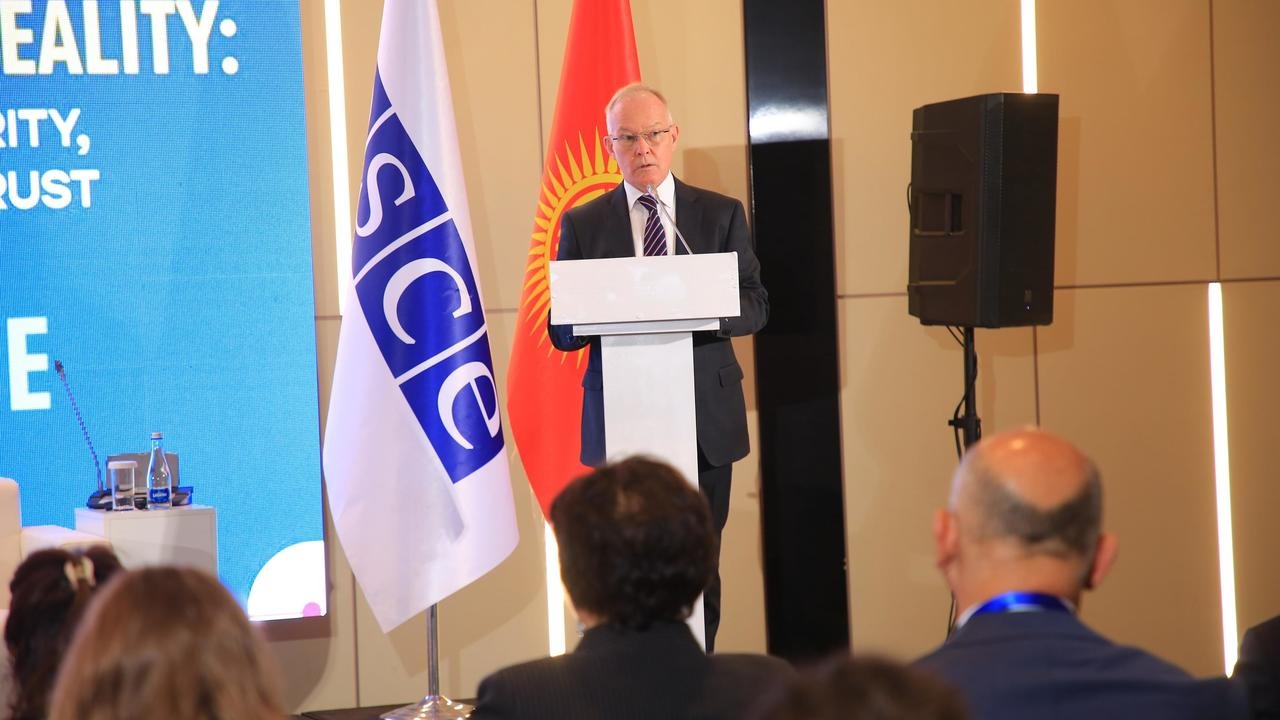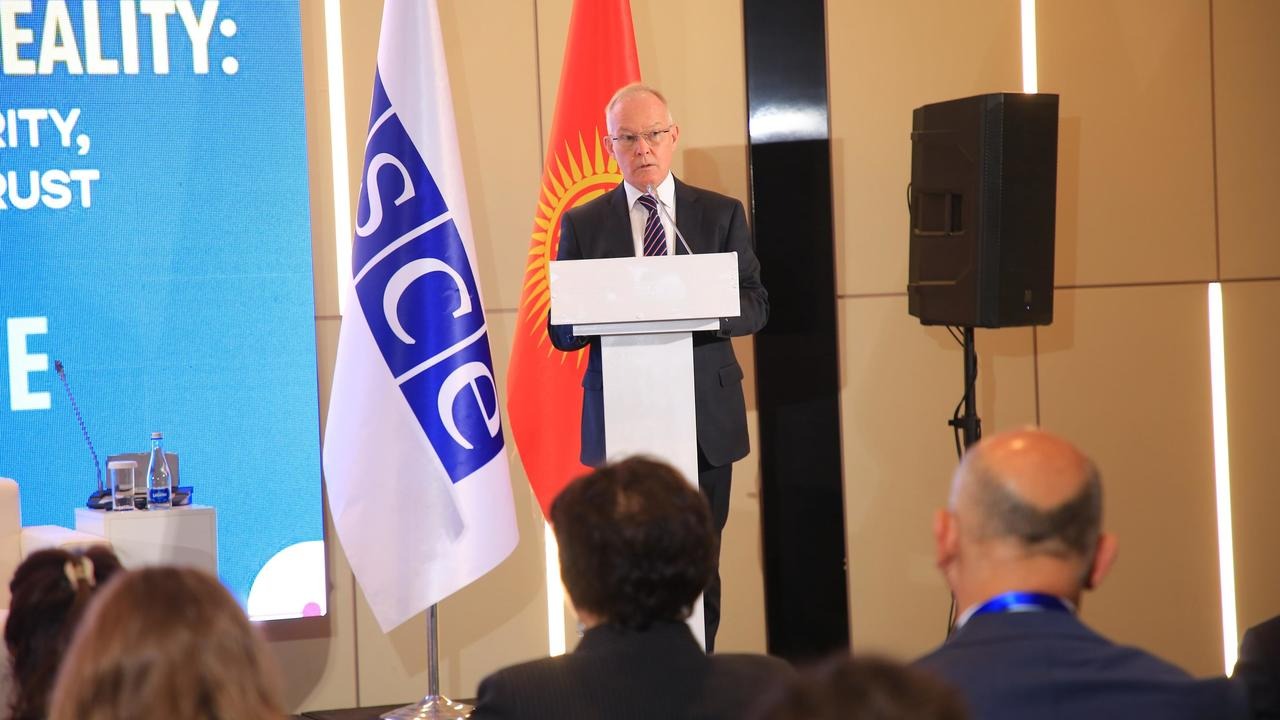
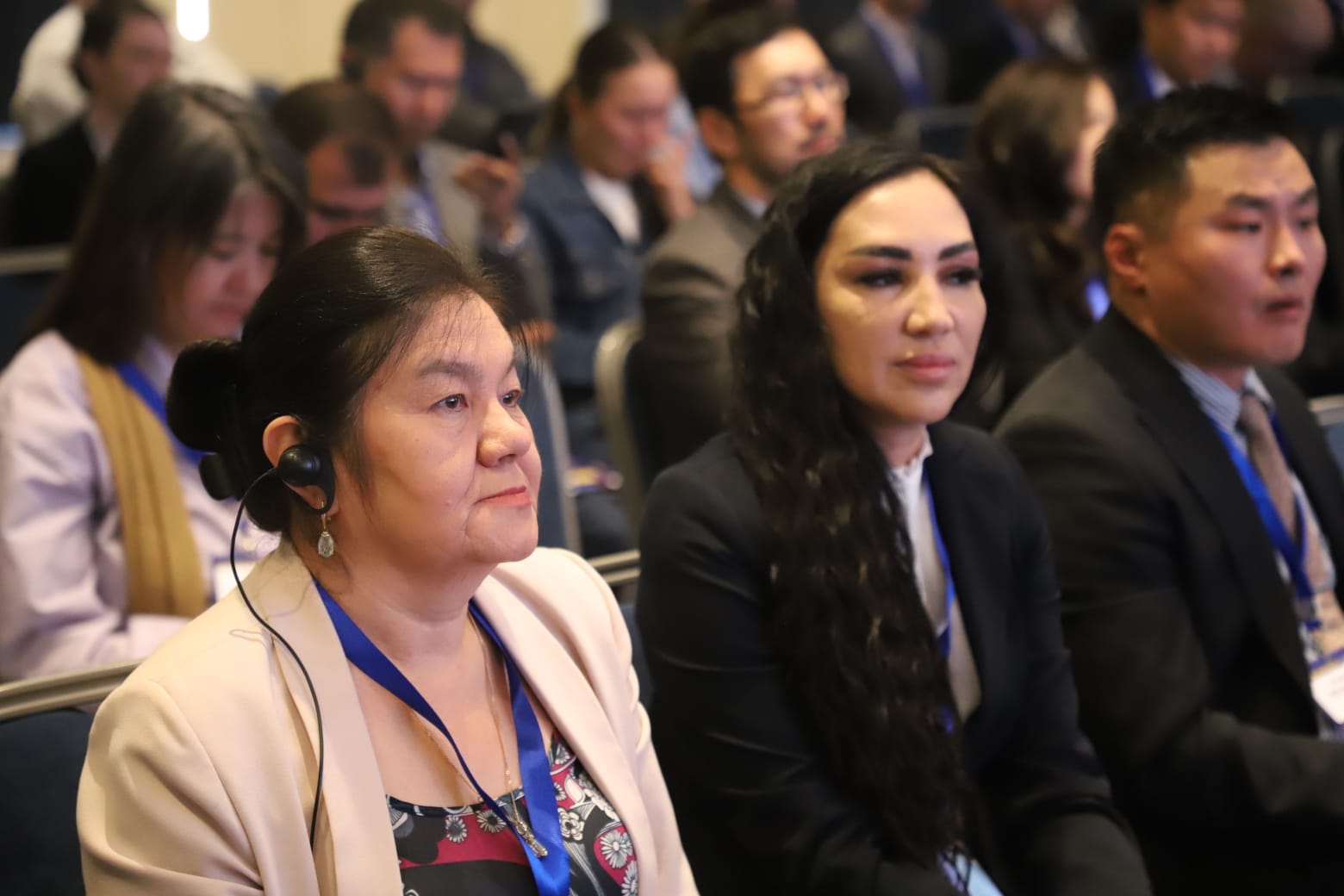
At the OSCE Central Asia Media Conference in Bishkek, journalists, lawyers, educators and government representatives sought to answer a defining question of the digital age: how can trust in information be preserved when news is increasingly created and distributed with the involvement of platforms and artificial intelligence?
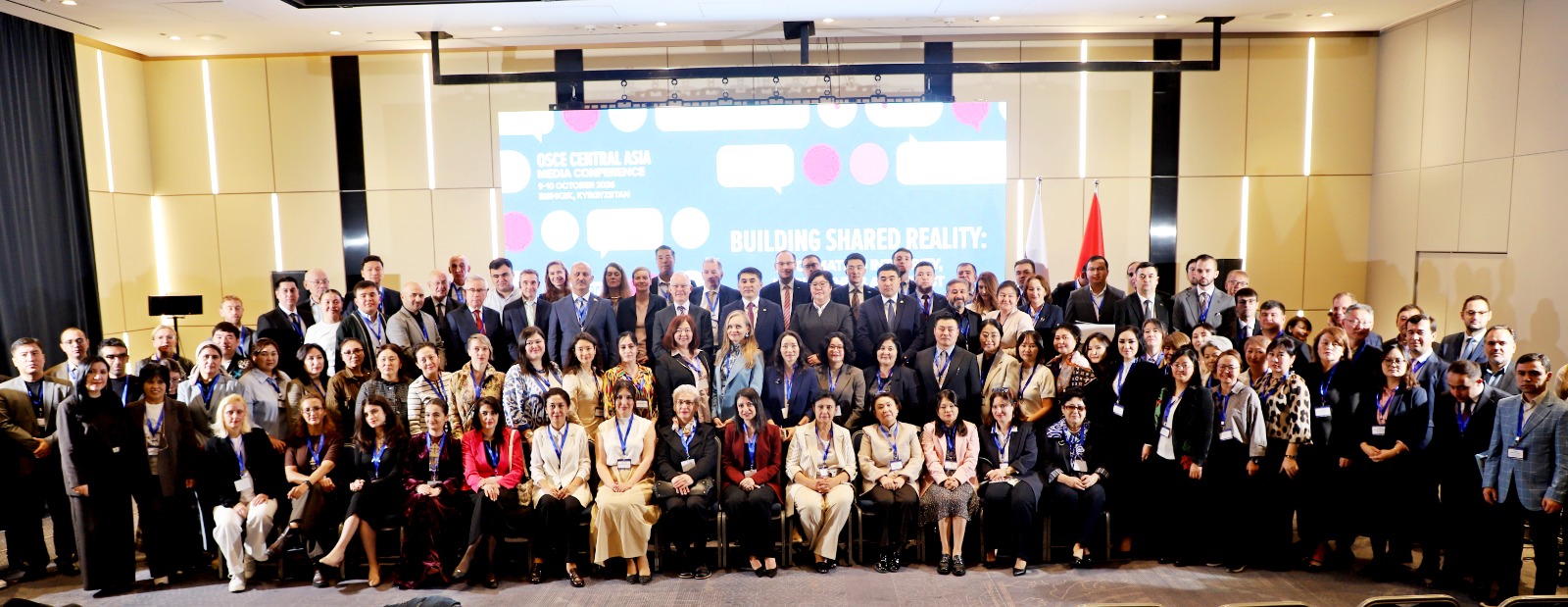
More than 120 participants from Kyrgyzstan, Kazakhstan, Tajikistan, Turkmenistan, Uzbekistan and Mongolia gathered in Bishkek for the 26th Central Asia Media Conference. Organized by the Office of the OSCE Representative on Freedom of the Media, the forum was held under the theme “Building a Shared Reality: Information Integrity, Media Ethics and Trust in the Digital Age.” The discussion went far beyond new technologies, focusing on human responsibility for the information that shapes society’s understanding of the world.
The conference was opened by Kyrgyz Foreign Minister Jeenbek Kulubaev; OSCE Representative on Freedom of the Media Jan Braathu; Kyrgyz Minister of Culture, Information and Youth Policy Mirbek Mambetaliev; and Head of the OSCE Programme Office in Bishkek Volker Frobarth.
Jan Braathu highlighted the profound transformation of the information environment. More and more people now get their news not from traditional broadcasts and newspapers, but through social media, digital platforms and messaging apps. Technology accelerates the production and distribution of content, while making it harder to verify where that content comes from and whether it is accurate. Professional standards, transparent editorial decision-making and preparing journalists to work in a digital environment are therefore no longer mere formalities; they are prerequisites for public trust.
Participants discussed independent press councils, complaints mechanisms and editorial accountability. These self-regulatory institutions must now address not only established questions of journalistic ethics, but also new challenges: the algorithmic amplification of content, the use of generative models, the spread of synthetic content and media outlets’ dependence on the rules set by major platforms.
Another key topic was the regional roadmap for implementing the policy guidance issued by the Office of the OSCE Representative on Freedom of the Media on safeguarding media freedom in the age of Big Tech platforms and artificial intelligence. Gulmira Birzhanova, co-founder of the Legal Media Center and Head of Legal Services at Media Qoldau in Kazakhstan, drew attention to the problems journalists and civil society organizations face every day: suspended accounts, removed posts, opaque platform decisions and complex appeal procedures.
Serdar Agayev of the Supreme Court of Turkmenistan noted the relevance of international experience in developing national approaches to media resilience and platform regulation. Representatives of government institutions, newsrooms and civil society considered the legislative, economic and technological changes of the past year not in isolation, but in terms of their impact on media pluralism, access to reliable information and audience trust.
The conference’s practical agenda included protecting journalistic sources, data and communications, as well as responding to cyber threats. Particular attention was paid to online harassment and violence against women journalists. Participants also discussed translating OSCE Ministerial Council Decision No. 3/18 on the Safety of Journalists into the languages of the region. Such translation is more than a linguistic exercise: it makes international commitments clearer and more accessible to newsrooms, human rights defenders and public authorities.
Tajikistan was represented in these discussions by media leaders, lawyers and digital resilience specialists. Shahlo Akobirova, Director of the Khoma NGO, took part in the discussion on media freedom amid the growing influence of major platforms and AI. Nuriddin Karshiboev, Chair of the National Association of Independent Media of Tajikistan, spoke about the legislative, economic and technological challenges facing the information environment. Khoma media lawyer Ranjeth Yatimov joined the discussion on journalists’ safety, while independent expert Rustam Gulov participated in the digital security workshop.
The most concrete part of the conference was the exchange of experience among newsrooms already using artificial intelligence. Azat Seitmuhammedov, founder of Turkmenistan’s Arzuw News, explained how a four-person newsroom used a language model to translate an archive of 16,000–17,000 news reports into English. The team also set up a system that monitors media outlets and government websites and produces short summaries for Telegram. No translation is published without an editor’s approval: even when the output is of high quality, facts, figures and names must still be checked separately.
According to Kaktus Media Director Dina Maslova, the outlet uses AI primarily to transcribe interviews and adapt long-form stories for social media. However, translations into Kyrgyz still require substantial editing, and the newsroom remains cautious about automated voiceovers and image generation. Maslova also warned of a less obvious risk: routinely outsourcing intellectual work to machines may weaken human professional skills.
“The brain is inherently lazy, and we will simply become less intelligent. I do not think we will suddenly turn into artists,” Dina Maslova said, challenging the assumption that time saved through automation will automatically make journalists more creative.
Askhat Yerkimbay, a lecturer at SDU University, described this as an “efficiency trap”: technology promises to save time, but a significant share of that time is then spent checking the output. At the same time, he demonstrated that useful tools can be affordable even for small teams. A “radar” he developed to monitor regional news in three languages costs approximately two US dollars per month.
Yerkimbay also drew attention to linguistic inequality. AI models still understand the national languages of Central Asian countries less effectively than English and Russian. This means that errors may arise not only from technological limitations, but also from a shortage of high-quality data in national languages. Newsrooms in the region must therefore apply especially rigorous checks to content produced in local languages.
Khurshed Kurbonshoev, a lawyer and specialist in digital rights and digital well-being from Tajikistan, suggested that audiences may eventually tire of formulaic synthetic content. Even in a brief news item, readers will look for a human presence: a recognizable voice, experience and a sense of authorial responsibility. In his view, newsrooms should preserve their distinctive style, while journalists should develop convergent skills by combining work with text, visual content and digital tools.
The practical conclusion was clear: an editorial AI policy cannot be reduced to simply allowing or banning particular services. Every newsroom needs to define which tasks may be automated, what data must never be uploaded to external systems, how synthetic content should be labelled, who verifies the output and who is accountable for published material.
Links between universities and newsrooms formed another important strand of the discussion. Nargis Kosimova, professor and editor-in-chief of ekolog.uz, stressed the need to bridge the gap between theory and practice, update journalism education and, at the same time, discuss the ethical boundaries of AI use in the classroom. It is not enough for future journalists to learn how to use a service: they must understand the origins of the data, recognize potential distortions and be able to explain to audiences how a piece of content was created.
Asel Sooronbaeva, editor-in-chief of Chekit Media and moderator of the discussion on editorial AI policies, noted that media outlets across the region are at different stages of technological development. For her, the Turkmen delegation’s more visible participation was an important sign that the shared regional dialogue is broadening. Exchanging practices makes it possible to identify not only the benefits of new tools, but also the mistakes that newsrooms would be wise not to repeat.
During the conference, Kyrgyz Deputy Foreign Minister Kairat Tursunkulov met with Jan Braathu. They discussed co-operation, the exchange of experience among Central Asian media outlets and the development of professional journalism standards.
At the close of the forum, participants proposed developing practical mechanisms for regional media co-operation, improving professional standards, strengthening journalists’ digital security and establishing clear rules for the use of AI in newsrooms. The Bishkek meeting showed that technology is indeed changing the speed of news production and expanding the capabilities of small teams. Yet it does not remove any of journalism’s fundamental responsibilities. People must still verify facts, protect sources, explain editorial decisions and remain accountable to the public.
Gulmira Sultanbayeva
Expert to the OSCE Representative on Freedom of the Media